March 1, 2018
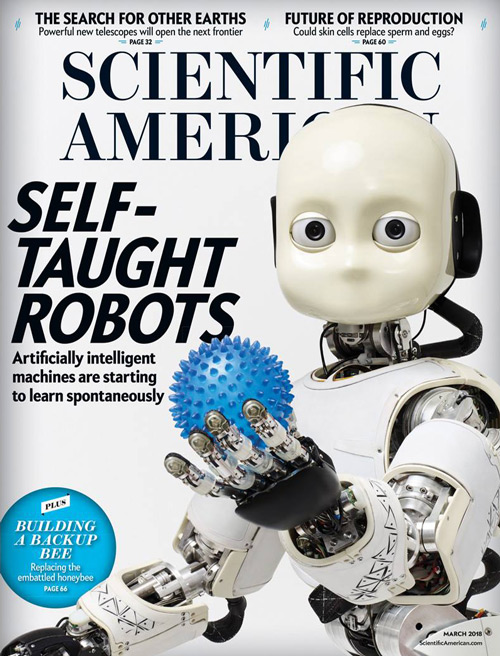
Are we living in a post-truth world?
In 2005 the American Dialect Society’s word of the year was “truthiness,” popularized by Stephen Colbert on his news show satire The Colbert Report, meaning “the truth we want to exist.” In 2016 the Oxford Dictionaries nominated as its word of the year “post-truth,” which it characterized as “relating to or denoting circumstances in which objective facts are less influential in shaping public opinion than appeals to emotion and personal belief.” In 2017 “fake news” increased in usage by 365 percent, earning the top spot on the “word of the year shortlist” of the Collins English Dictionary, which defined it as “false, often sensational, information disseminated under the guise of news reporting.”
Are we living in a post-truth world of truthiness, fake news and alternative facts? Has all the progress we have made since the scientific revolution in understanding the world and ourselves been obliterated by a fusillade of social media postings and tweets? No. As Harvard University psychologist Steven Pinker observes in his resplendent new book Enlightenment Now: The Case for Reason, Science, Humanism, and Progress (Viking, 2018), “mendacity, truth-shading, conspiracy theories, extraordinary popular delusions, and the madness of crowds are as old as our species, but so is the conviction that some ideas are right and others are wrong.”
Even as pundits pronounced the end of veracity and politicians played loose with the truth, the competitive marketplace of ideas stepped up with a new tool of the Internet age: real-time fact-checking. As politicos spin-doctored reality in speeches, factcheckers at Snopes.com, FactCheck.org, and OpenSecrets.org rated them on their verisimilitude, with PolitiFact.com waggishly ranking statements as True, Mostly True, Half True, Mostly False, False, and Pants on Fire. Political fact-checking has even become clickbait (runner-up for the Oxford Dictionaries’ 2014 word of the year), as PolitiFact’s editor Angie Drobnic Holan explained in a 2015 article: “Journalists regularly tell me their media organizations have started highlighting fact-checking in their reporting because so many people click on fact-checking stories after a debate or high-profile news event.” (continue reading…)
February 1, 2018
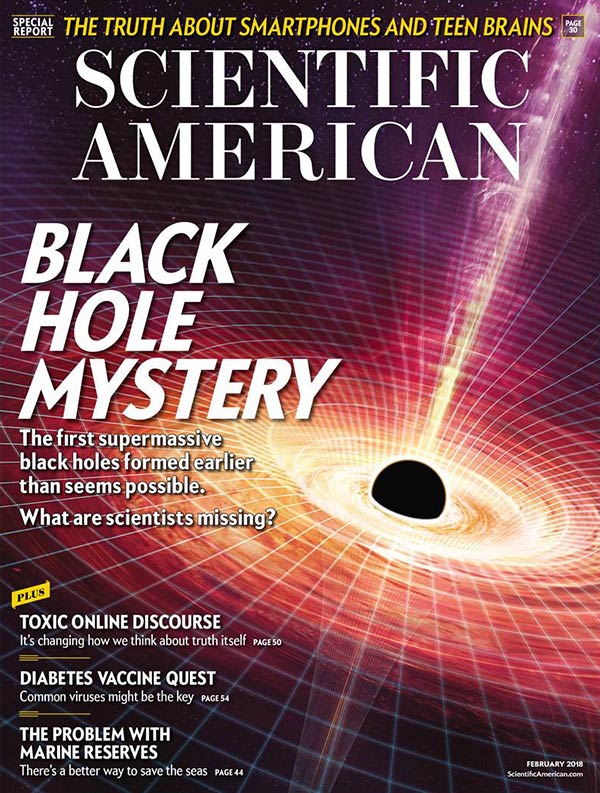
Science reveals our deepest purpose
In a flashback scene in the 1977 film Annie Hall, Woody Allen’s character Alvy Singer is a depressed young boy who won’t do his homework because, as he explains to his doctor: “The universe is expanding…. Well, the universe is everything, and if it’s expanding, someday it will break apart, and that will be the end of everything.” His exasperated mother upbraids the youth: “What has the universe got to do with it?! You’re here in Brooklyn. Brooklyn is not expanding!”
Call it “Alvy’s Error”: assessing the purpose of something at the wrong level of analysis. The level at which we should assess our actions is the human timescale of days, weeks, months and years—our life span of fourscore plus or minus 10—not the billions of years of the cosmic calendar. It is a mistake made by theologians when arguing that without a source external to our world to vouchsafe morality and meaning, nothing really matters.
One of the most prominent theologians of our time, William Lane Craig, committed Alvy’s Error in a 2009 debate at Columbia University with Yale University philosopher Shelly Kagan when he pronounced: “On a naturalistic worldview, everything is ultimately destined to destruction in the heat death of the universe. As the universe expands, it grows colder and colder as its energy is used up. Eventually all the stars will burn out, all matter will collapse into dead stars and black holes, there will be no life, no heat, no light—only the corpses of dead stars and galaxies expanding into endless darkness. In light of that end, it’s hard for me to understand how our moral choices have any sort of significance. There’s no moral accountability. The universe is neither better nor worse for what we do. Our moral lives become vacuous because they don’t have that kind of cosmic significance.” (continue reading…)
January 1, 2018
Combating science denial with science pleasure
That conservatives doubt scientific findings and theories that conflict with their political and religious beliefs is evident from even a cursory scan of right-leaning media. The denial of evolution and of global warming and the pushback against stem cell research are the most egregious examples in recent decades. It is not surprising, because we expect those on the right to let their politics trump science—tantamount to a dog-bites-man story.
That liberals are just as guilty of antiscience bias comports more with accounts of humans chomping canines, and yet those on the left are just as skeptical of well-established science when findings clash with their political ideologies, such as with GMOs, nuclear power, genetic engineering and evolutionary psychology—skepticism of the last I call “cognitive creationism” for its endorsement of a blank-slate model of the mind in which natural selection operated on humans only from the neck down.
In reality, antiscience attitudes are formed in very narrow cognitive windows—those in which science appears to oppose certain political or religious views. Most people embrace most of science most of the time.
Who is skeptical of science, then, and when?
That question was the title of an October 2017 talk I attended by Asheley R. Landrum, a psychologist at Texas Tech University, who studies factors influencing the public understanding and perception of science, health and emerging technologies. She began by citing surveys that found more than 90 percent of both Republicans and Democrats agreed that “science and technology give more opportunities” and that “science makes our lives better.” She also reviewed modest evidence in support of the “knowledge deficit hypothesis,” which posits that public skepticism of science is the result of inadequate scientific knowledge. Those who know more about climate science, for example, are slightly more likely to accept that global warming is real and caused by humans than those who know less on the subject. (continue reading…)
December 1, 2017
Why “outcasting” works better than violence
After binge-watching the 18-hour PBS documentary series The Vietnam War, by Ken Burns and Lynn Novick, I was left emotionally emptied and ethically exhausted from seeing politicians in the throes of deception, self-deception and the sunk-cost bias that resulted in a body count totaling more than three million dead North and South Vietnamese civilians and soldiers, along with more than 58,000 American troops. With historical perspective, it is now evident to all but delusional ideologues that the war was an utter waste of human lives, economic resources, political capital and moral reserves. By the end, I concluded that war should be outlawed.
In point of fact, war was outlawed … in 1928. Say what?
In their history of how this happened, The Internationalists: How a Radical Plan to Outlaw War Remade the World (Simon & Schuster, 2017), Yale University legal scholars Oona A. Hathaway and Scott J. Shapiro begin with the contorted legal machinations of lawyers, legislators and politicians in the 17th century that made war, in the words of Prussian military theorist Carl von Clausewitz, “the continuation of politics by other means.” Those means included a license to kill other people, take their stuff and occupy their land. Legally. How?
In 1625 the renowned Dutch jurist Hugo Grotius penned a hundreds-page-long treatise originating with an earlier, similarly long legal justification for his country’s capture of the Portuguese merchant ship Santa Catarina when those two countries were in conflict over trading routes. In short, The Law of War and Peace argued that if individuals have rights that can be defended through courts, then nations have rights that can be defended through war because there was no world court. (continue reading…)
November 1, 2017
Does it come from talent, hard work—or luck?
At a campaign rally in Roanoke, Va., before the 2012 election, President Barack Obama opined: “If you were successful, somebody along the line gave you some help. There was a great teacher somewhere in your life&8230; . Somebody invested in roads and bridges. If you’ve got a business—you didn’t build that. Somebody else made that happen.”
Although Obama was making a larger point about the power of collective action, such as building dams, power grids and the Internet, conservative heads exploded at the final sentiment. “I did build that!” is an understandable rejoinder to which I can relate. I research my books, edit my magazine, teach my courses and write these columns (this one is my 200th in a row for Scientific American). If I don’t make them happen, nobody else will.
But then I started thinking as a social scientist on the role of circumstance and luck in how lives turn out. It’s a sobering experience to realize just how many variables are out of our control:
(continue reading…)