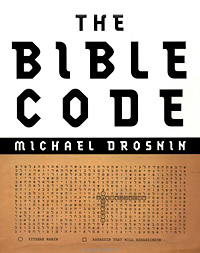
The Bible Code claims that hidden in the first five books of the Bible in its original Hebrew text are hidden messages in code that made predictions thousands of years ago about current events, such as the assassination of JFK and the end of the world. In this episode Michael Shermer decodes the Bible Code and reveals it to be a form of numerology that serves as a supreme example of pattern-seeking (and finding) behavior of which we are so skilled.
Denying History takes a bold and in-depth look at those who say the Holocaust never happened and explores the motivations behind such claims. While most commentators have dismissed the Holocaust deniers as antisemitic neo-Nazi thugs who do not deserve a response, historians Michael Shermer and Alex Grobman have immersed themselves in the minds and culture of these Holocaust “revisionists.” They have conducted personal interviews with the deniers, read their literature, monitored their Web sites, attended their conferences, engaged them in debate, and even traveled around Europe to conduct research at the Nazi extermination camps. Uncovering a complex social movement, the authors go much deeper than ever before in not only trying to understand the motives of the Holocaust deniers, but also refuting their points one by one. In the process, they show how we can be certain that the Holocaust happened and, for that matter, how we can confirm any historical event.
In this age of supposed scientific enlightenment, many people still believe in mind reading, past-life regression theory, New Age hokum, and alien abduction. A no-holds-barred assault on popular superstitions and prejudices, with more than 80,000 copies in print, Why People Believe Weird Things debunks these nonsensical claims and explores the very human reasons people find otherworldly phenomena, conspiracy theories, and cults so appealing. In an entirely new chapter, “Why Smart People Believe in Weird Things,” Michael Shermer takes on science luminaries like physicist Frank Tippler and others, who hide their spiritual beliefs behind the trappings of science. (continue reading…)
In 1859 John Taylor published a book entitled The Great Pyramid, in which he discovered that if you divide the height of the pyramid into twice the side of its base, you get a number close to Π. This, and other relationships he found to be deeply meaningful. Soon after, others began to turn up similar “discoveries”, such as that the base of the Great Pyramid divided by the width of a casing stone equals the number of days in the year, and that the height of the Great Pyramid multiplied by 109 approximately equals the distance from the Earth to the Sun.
Humans are pattern-seeking animals. At Skeptic magazine we routinely receive calls from people who see the Virgin Mary in the shadows of a tree, the face of Jesus in a partially burnt tortilla, Mother Teresa in a sweet roll, or a face on Mars. JFK lives in stone profile in Hawaii. Eagle Rock sports a giant winged boulder overlooking the city. Patterns are everywhere. But which patterns are meaningful and which are not? (continue reading…)